
30 Dec Six Steps To Start Your STEM Program Today
Starting a STEM programme can feel overwhelming, especially when you’re trying to figure out what students really need and how to make the lessons meaningful. Whether your learners are already attending math or science tuition, or just beginning their STEM journey, it’s normal to wonder how to guide them effectively.
You might even be asking yourself:
Where do I begin, and how do I make this exciting for my students?
This guide is here to make the process easier. Whether you’re building a new programme or strengthening an existing one, you’ll find simple, practical steps to help you create something that truly supports and inspires young learners.
What Does STEM Education In Singapore Stand For?
STEM or Science, Technology, Engineering And Mathematics education helps students make sense of how things work, why they work, and how they can be improved. It encourages young learners to explore ideas, ask questions, and experiment with solutions. By giving students opportunities to think creatively and analyse problems, you’re helping them build skills that are useful far beyond the classroom. In Singapore and many other countries, this type of learning supports growing industries, strengthens innovation, and prepares students for a fast-changing world.
Why Focus on STEM?
- Future-Ready Skills: STEM subjects provide students with essential skills that are highly sought after in the job market.
- Innovation and Creativity: It encourages students to think outside the box and come up with creative solutions.
- Interdisciplinary Learning: It integrates various disciplines, fostering a more comprehensive understanding of how the world works.
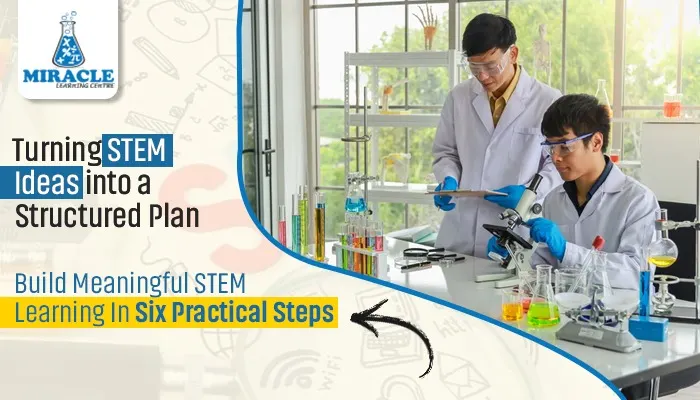
6 Steps to Starting a STEM Program
With the right approach, you can develop an effective STEM program that turns out to be both an exciting and rewarding endeavor. Here are some steps to help you get started:
1. Assess Your Current Curriculum
Begin by evaluating your existing curriculum. Identify gaps where STEM subjects could be integrated or enhanced. Consider which subjects could benefit from a more hands-on, experiential learning approach.
2. Set Clear Objectives
Define what you want to achieve with your STEM program. Are you aiming to improve student engagement, enhance problem-solving skills, or prepare students for specific careers? Clear objectives will guide your program development.
3. Develop a STEM Curriculum
When crafting your STEM curriculum, focus on creating a balanced mix of theory and practical application. Incorporate real-world problems that students can solve using STEM principles.
Consider including:
- Project-Based Learning: Encourage students to work on projects that require them to apply their STEM knowledge creatively.
- Collaborative Activities: Foster teamwork by incorporating group projects and discussions.
- Integration of Technology: Use technology to enhance learning experiences and introduce students to digital tools used in STEM fields.
4. Train and Support Educators
Your educators are the backbone of any successful STEM program. Provide them with the training and resources they need to effectively teach STEM subjects. Encourage collaboration among teachers to share best practices and innovative teaching methods.
5. Create an Engaging Learning Environment
Physical space plays a significant role in STEM education. Design classrooms and labs that encourage exploration and experimentation. Equip them with the necessary tools and technology to facilitate hands-on learning.
6. Collaborate with Industry Partners
Building partnerships with local businesses and industry leaders can provide valuable resources and insights. Industry professionals can offer guest lectures, internships, and real-world projects that enhance the learning experience.
Miracle Learning Centre: Your Partner In STEM Education
At Miracle Learning Centre, we believe in the transformative power of STEM education in Singapore. Our approach is centered around personalised learning experiences that cater to the unique needs of each student, whether they come from maths tuition, science tuition, or are just beginning their STEM journey.
Do you want to know how we might help you start a successful STEM programme?
Personalized Education System
We emphasize small-group interactions to ensure that each student receives the attention they need. Our educators focus on understanding individual learning styles and adapting teaching methods accordingly.
Practical Learning Experiences
Our curriculum is designed to provide students with hands-on activities that reinforce theoretical knowledge. By engaging in real-world applications, students gain a deeper and more meaningful understanding of STEM concepts.
Strong Teacher-Student Relationships
We prioritize building strong, consistent relationships between educators and students. This creates a supportive environment where learners feel confident exploring new ideas, asking questions, and developing curiosity.
Community Engagement
At Miracle Learning Centre, we work closely with the local community to give students opportunities to participate in STEM-related activities beyond the classroom. This includes collaborations with local organisations and involvement in STEM competitions, helping students connect their learning to real-world contexts.
A Few STEM Curriculum Ideas
If you're looking for inspiration, here are some STEM curriculum ideas that you can incorporate into your program:
Robotics and Coding
Introduce students to the exciting world of robotics and coding. Through building and programming robots, students learn about engineering, mathematics, and computer science.
Environmental Science Projects
Encourage students to explore environmental issues and develop solutions. Projects could include designing sustainable energy systems or creating models to address climate change.
Engineering Challenges
Present students with real-world engineering challenges, such as designing bridges or developing water filtration systems. These activities promote critical thinking and problem-solving.
Math in Action
Show students how math is used in everyday life by incorporating practical applications, such as budgeting, statistical analysis, and data interpretation.
Final Thoughts
Starting a STEM programme can feel like a big step, but it becomes a meaningful and enjoyable journey when you have the right support. At Miracle Learning Centre, we work closely with educators and students to make STEM learning engaging and practical, complementing what they already learn in combined science tuition or structured maths learning institutes. By using the ideas in this guide and tapping into our experience, you can spark curiosity, strengthen critical thinking, and help students build skills that truly matter.
With our guidance, you’re not just teaching lessons but shaping confident young thinkers who are ready to take on the challenges of the future.
Talk to us today to discuss a potential partnership!