
07 Mar Understanding Genetic Disorders From Causes To Symptoms And Long Term Effects
Have you ever wondered why some diseases are quite common within a family?
Let’s take the example of diabetes mellitus. We tend to see the same disorder in every generation of the family, as if it’s being passed on like a heritage gift (or curse).
We also commonly refer to some recurrent family problem as “It’s genetic”.
So what ARE these ‘genetic’ issues and where are they sourced? What causes them and how do they affect someone’s life in general?
Before you get bombarded with all the difficult disease names and symptoms in O-level biology, let’s give you a brief idea regarding genetic disorders.
So, What Are Genes Exactly?
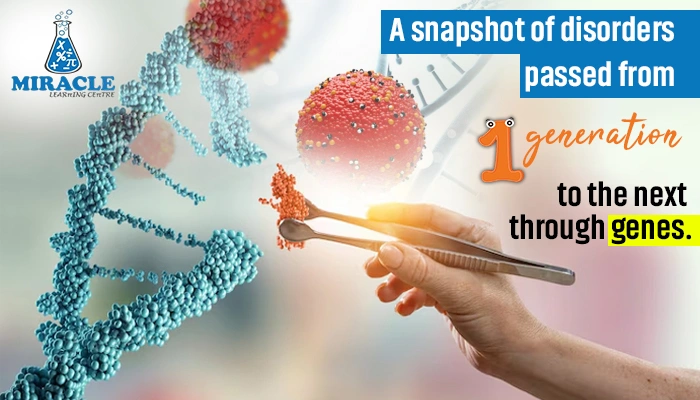
Genes are tiny segments of DNA found in the nucleus of almost every cell in our body. Each gene carries instructions for making proteins, which control how our body develops and operates.
We inherit our genes from our parents. Half come from the mother and half from the father. This is why children often resemble their parents in appearance, behaviour, and even health conditions.
When a gene carries an error or mutation, it may give incorrect instructions. This affects how the body works and may result in a genetic disorder
Understanding Genetic Disorders From The Beginning
In simple words, these are adverse gene conditions that may or may not get inherited from either of the parents. The first thing that you know is, genetic disorders are not contagious. These abnormalities of the genes cannot be spread through touch or by environmental agents. While some of them may appear at the beginning of a child’s birth, others can be diagnosed much later in life.
A List Of Gene Disorders Along With Their Symptoms
At our Secondary science tuition classes, we always explain genetic disorders through real life examples.
Let’s tell you how even the minutest of changes in gene structure can create complications for regular body functioning. You’ll also get an idea about how these issues get passed on from one generation to the next.
Down Syndrome
It’s probably the most-heard-of genetic disorder that’s caused just by the presence of an extra chromosome. It affects the physical and intellectual development of a child and is diagnosed quite early in life, generally during infancy. However, you should know that this ‘genetic disorder’ is not inherited from parents but is caused by an error during cell multiplication in the womb.
Sickle Cell Anaemia
As the name implies, sickle cell anaemia affects the shape of red blood cells, causing them to become somewhat rigid and sickle-shaped. These abnormal cells do not carry oxygen efficiently and can block blood vessels, increasing chances of stroke. This condition is inherited when both parents pass on the faulty gene.
Haemophilia
Now this is another disease of the blood that impacts the body’s natural ability to form clots. The people with this disorder are instructed to stay away from sharp substances, as they may bleed for a longer time after a cut. Also, they are advised to lead a careful life throughout to prevent major injuries, where they can even bleed to death. It is also a sex-linked genetic disorder, passed from parent to child through genes on the X chromosome.
Thalassaemia
Again a blood disorder, Thalassaemia affects the production of haemoglobin, the key protein that carries oxygen in red blood cells. People with this disorder may experience tiredness and weakness all the time. They may also need frequent blood transfusions to maintain the level of haemoglobin in the body. This genetic disorder is usually inherited from both parents through faulty genes.
Color Blindness
This is a peculiar kind of genetic disorder where a person faces issues, like recognizing certain color patterns, commonly red, green and their shades. The faulty genes in this disorder are in the colour-detecting cells in the eyes. It’s more common in males than females, as it’s a sex-linked disorder.
How Genetic Disorders Get Transferred
Consider these disorders as some genetic instructions, written in pairs. In every gene, we have two versions, one from the father, and the other from the mother.
Now, these instructions can be transferred in three main ways:
1. Recessive Inheritance
Only if the faulty gene is passed on from both the parents, then the symptoms appear in the child. Otherwise, the latter remains an asymptomatic carrier.
2. Dominant Inheritance
One faulty gene from any one of the parents is enough for the disorder to appear in this form of genetic inheritance.
3. Sex-linked Inheritance
Now, faulty genes present in X and Y chromosomes or ‘sex chromosomes’ give rise to these disorders. That’s why many diseases are more common in one gender and not both.
Get More Exciting Science Facts From Us
At Miracle Learning Centre, our science tuition classes in Singapore are not limited to textbook knowledge. We treat science as a part and parcel of our everyday lives and help students go deeper into each topic to recognize practical associations and applications.
Of course, we also help students score good grades in the exams, but that’s possible only when we have a holistic view of the subject. Science is everything that can be explained with logic, and our students learn how to interpret different scenarios with an analytical mind.
The results?
Well, Miracle learning Centre is a reputable science tuition centre in Bukit Timah with a history of meritorious students, who are now progressing fast in their respective careers.
Want to know more? Enroll today and enjoy learning science beyond textbooks.